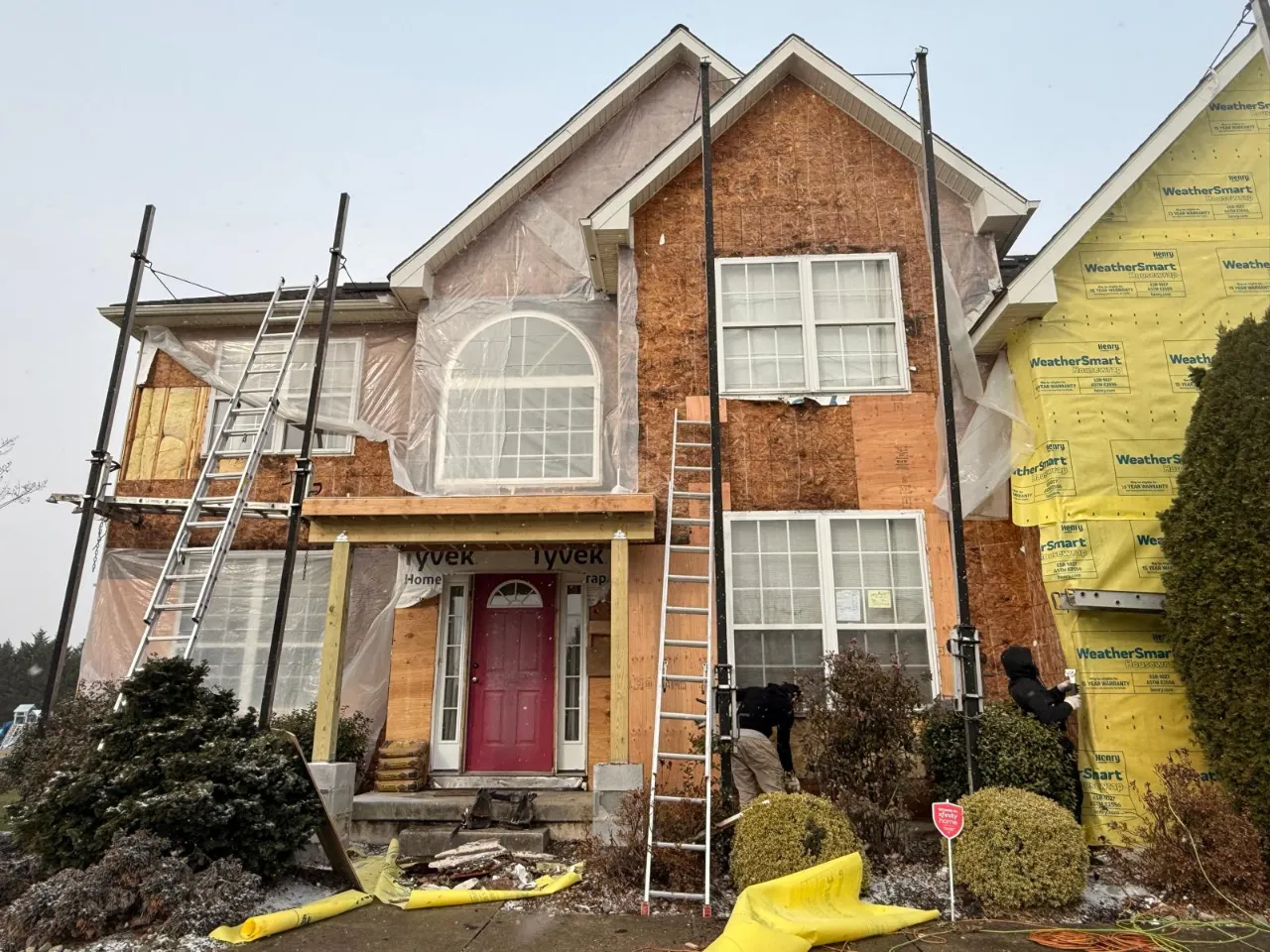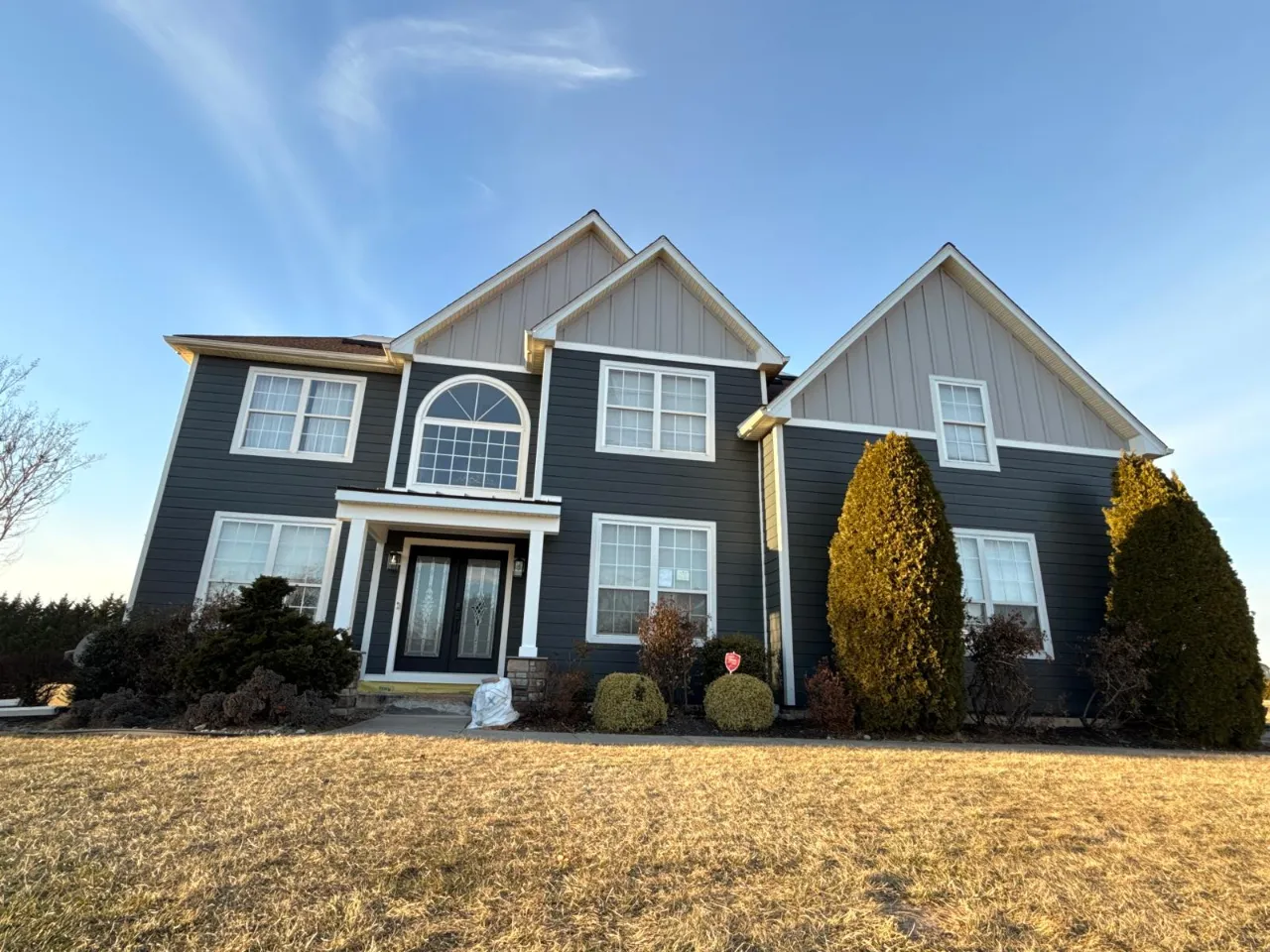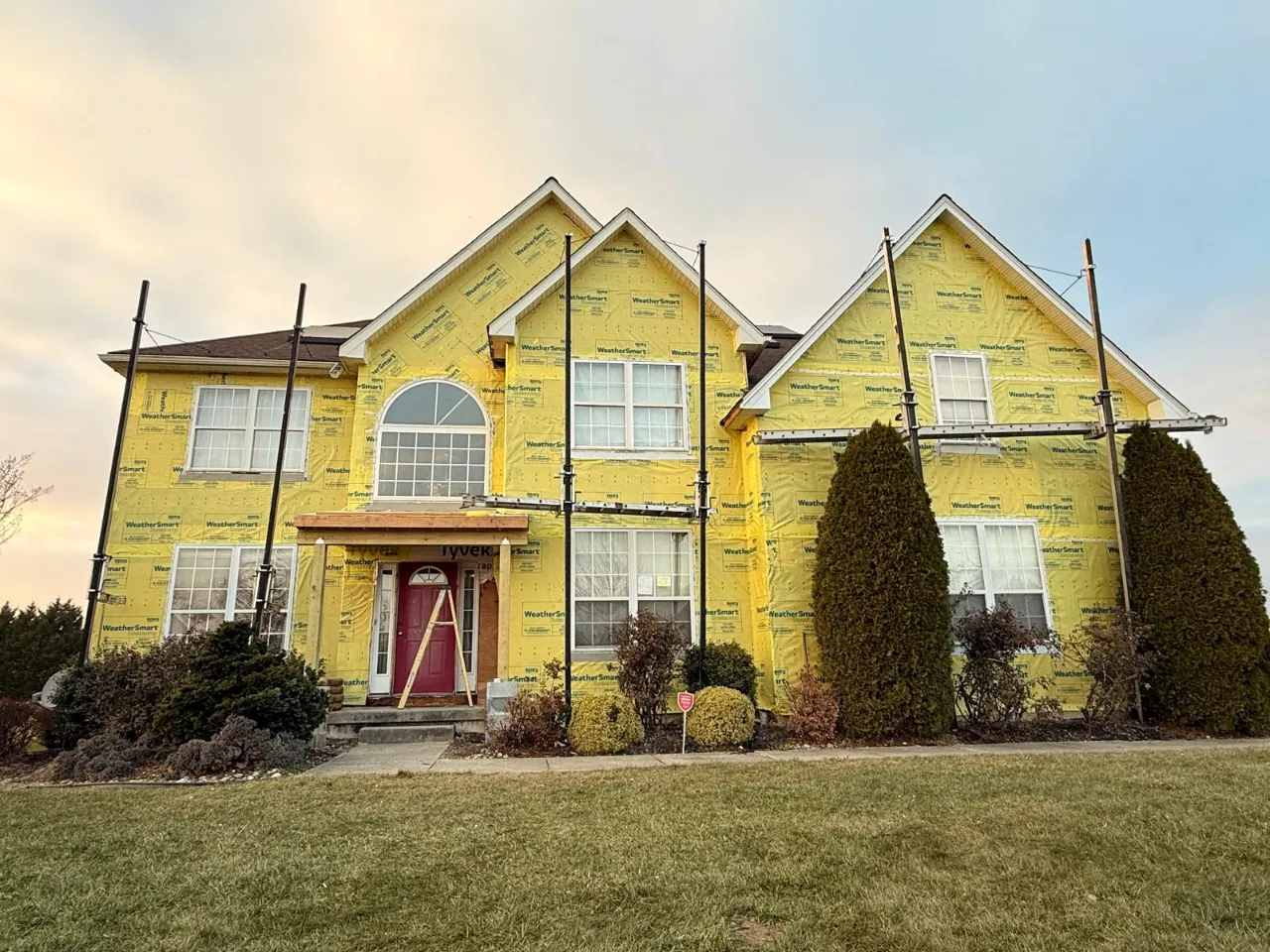
Siding hides its own problems. That's the frustrating part. A wall can look fine from the driveway and still be soaking wet underneath. The panels are doing exactly what they were built to do. They cover things up. By the time the damage is obvious from the street, the decision has usually been made already. So the useful question isn't whether the siding looks tired. It's whether the damage stopped at the surface or went past it. That's the real line between a repair and a replacement. A few cracked panels after a windy week is a repair. Water that has been sitting behind the wall since last spring is something else entirely. This guide walks through the signs that show up first. It also covers the ones homeowners in Pennsylvania notice too late, plus the cases where replacing everything is overkill. None of it needs a ladder or a moisture meter. Most of it you can check in ten minutes with your hands and a flashlight.
Press the Panels First
Start with your hands. Walk the perimeter and press firmly on the siding every few feet. Pay attention low on the wall and under the windows. Good siding pushes back. It feels solid, like pressing on a closed door. Bad siding gives. If a panel feels soft, spongy, or slightly hollow, the sheathing behind it is already compromised. That's plywood or OSB that has absorbed water and started to break down. The siding covering it might look perfect. Pay extra attention below window sills and where two walls meet at a corner. Those are the spots where flashing fails first and water finds a path in. One soft panel is a repair. Soft spots in three or four separate places usually mean the problem is the wall assembly, not the siding.
What Warping and Buckling Actually Mean
Vinyl expands and contracts with temperature. That's normal and it's why panels are hung with a little play instead of nailed tight. Mild movement isn't a red flag. What matters is the pattern. Panels that wave or ripple in one concentrated area point to heat plus a bad install. That's usually the south or west side. Panels that buckle in a straight vertical line usually mean the fasteners were driven too tight. The siding had nowhere to move. Neither of those is a water problem yet, and both are fixable. Warping that shows up randomly on several walls is different. That usually means the material has reached the end of its service life and is losing shape everywhere at once. Replacing panels one at a time on a wall like that turns into a permanent part time job.
Signs That Show Up Inside the House
Some of the clearest evidence isn't on the outside at all. Walk the rooms that sit against exterior walls and look at the paint. Paint that bubbles, peels, or flakes on an interior wall means moisture is moving through the wall assembly from outside. Wallpaper that lifts at a seam is the same signal. Check the closets on exterior walls too, since they stay closed and hold smell. A musty odor in a closet you rarely open is worth taking seriously. Look at the baseboards and the trim around windows on the same wall. Staining, softness, or a gap that wasn't there last year all point the same direction. When outside symptoms and inside symptoms line up on the same wall, you're not looking at a siding repair anymore. You're looking at a wall that needs to be opened.
When a Repair Is Still the Right Call
Plenty of siding damage is genuinely local. Replacing an entire house because of one bad section wastes money. A branch cracked four panels in a storm. A ladder gouged the siding during a gutter cleaning. A section near the driveway got hit. If the damage is contained and the surrounding panels are solid, a repair is the right answer. Nothing inside the house should be reacting either. The one catch is matching. Vinyl fades, and a panel made ten years ago rarely matches what's on the shelf today. On a visible wall, a good crew pulls matching panels from a hidden side of the house. The new panels go there instead. It costs a little more labor and saves the whole wall from looking patched.